A three-year pursuit of a New Jersey cold-storage project ended unexpectedly when the company Karl Dickman worked for decided to walk away.
Dickman had a choice: walk away with them or find another way forward.
He chose the latter.
“I’ve always wanted to do my own thing,” Dickman recalls.
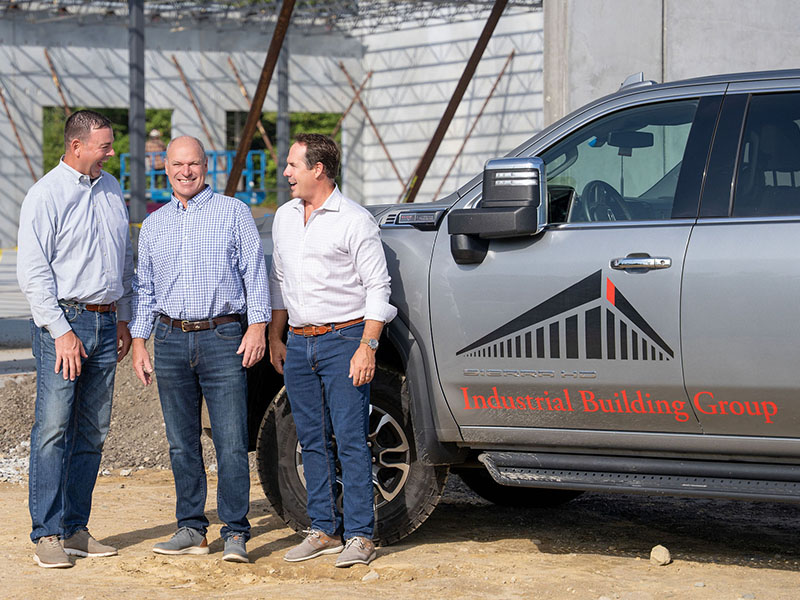
What Dickman now describes as the “perfect storm” became the beginning of Industrial Building Group (IBG). With little more than a one-hour business plan and the determination to see the project through, Dickman launched the company and went after its first assignment—a 130,000-square-foot cold-storage facility in Elizabeth, New Jersey.
It was a consequential first project. The facility would eventually be recognized as the 2021 CREDA (Formerly NAIOP) New Jersey Industrial Project of the Year.
More importantly, it established the foundation for a company built around a simple premise: experience changes the way difficult buildings are designed, constructed, and delivered.
More Than a Refrigerated Box
To most people, a cold-storage facility is a giant refrigerated box.
To Industrial Building Group, it is a highly interconnected system in which every component has to work together.
Refrigeration. The thermal envelope. Racking. Cold docks. Access doors. Electrical infrastructure. Power. Site logistics. Each decision can affect the performance, cost, schedule, and ultimately the operation of the finished facility.
That complexity is where IBG believes its experience creates an advantage.
The company began with one project and a small team. Nearly six years later, IBG has developed into a specialized construction company focused on cold storage, dry storage, speculative warehouse development, Unit Cold facilities, and food processing.
The growth has been significant. Annual revenue increased from approximately $28 million to $250 million within a three-year period.
But Dickman is quick to point out that growth brings its own challenges.
“It was an enormous challenge,” he says.
His approach to that challenge has been straightforward: work harder than everyone else and expect the same commitment from himself that he expects from his team.
Matt Kuschan, CFO and Partner, remembers receiving emails from Dickman at 3:45 in the morning.
“I am the guy that’s working the hardest out there,” Dickman says.
It is a philosophy that has helped shape the culture of IBG.
Experience Becomes an Advantage
As the company grew, so did the depth of its leadership team.
Zan Perry joined IBG full time in January 2023 as Director of Cold Storage and Partner. Perry brought more than 20 years of experience in the cold-storage industry, adding another layer of specialized knowledge to a company whose business increasingly depends on understanding the details others may overlook.
That experience matters because the biggest opportunities on a project are not always obvious.
At a recently started facility, IBG was faced with a constrained and expensive site. The objective was straightforward: maximize pallet capacity without compromising the way the facility would operate.
Instead of accepting the site constraints as fixed, the team went back to the design.
By reworking the drainage strategy and incorporating retaining walls to reduce the footprint of the stormwater basin while maintaining its required capacity, IBG created approximately 15,000 additional square feet of freezer space.
The additional area translates into thousands of additional pallet positions.
For the customer, the result wasn’t simply more square footage. It was greater revenue-producing capacity from the same site.
“Providing our customers insights from 30 years of experience on cold-storage building is priceless,” Dickman says.
That may be one of the clearest explanations of IBG’s value proposition.
The company doesn’t simply build the facility that appears on the drawings. It asks whether the drawings represent the best solution in the first place.
Challenging What Has Always Been Done
That same philosophy applies to construction methods.
Recently, IBG revisited a freezer construction approach its team had used successfully for approximately 16 years.
There was nothing fundamentally wrong with the existing method. It had worked on numerous projects.
But the team asked a different question:
Could it be done better?
Through continued analysis and exploration of alternative approaches, IBG developed several changes to its Critical Erection Sequence.
Dickman believes those changes could reduce future construction schedules by four to five weeks.
For a cold-storage facility, four to five weeks can represent significant value. It can mean earlier occupancy, earlier operations, reduced carrying costs, and a faster path to revenue.
For IBG, innovation is not necessarily about replacing everything that came before it.
Sometimes it means taking something that already works and asking whether experience can make it work better.
Staying With the Problem
Not every project challenge can be solved through design.
In Kaufman, Texas, IBG encountered a different obstacle: power.
The remote site required a reliable electrical solution, but securing the necessary infrastructure proved challenging. For nearly eight months, IBG explored alternatives and worked with the local economic development organization and utility provider.
Eventually, the required power solution was secured.
The lesson was less about electricity than persistence.
For IBG, difficult problems are part of the job. The expectation is not that every problem will have an immediate answer. The expectation is that the team will stay engaged until a workable answer is found.
Learning From the Last Project
IBG’s approach to problem-solving doesn’t end when a building is completed.
After every project, the company conducts a formal “Project Review Meeting.”
The purpose is simple: identify what worked, what didn’t, and what can be done better next time.
Laborers, superintendents, project managers, and senior leadership all participate.
That cross-section is intentional.
A decision that looks successful from a project-management perspective may have created an unnecessary challenge in the field. Conversely, a field-level solution may reveal an opportunity that management had not considered.
By bringing those perspectives together, IBG attempts to turn individual project experience into institutional knowledge.
The next project should benefit from the last one.
Partnering Before Construction Begins
That philosophy also influences how IBG works with its customers.
The company frequently becomes involved before a project is fully defined, sometimes providing pre-construction support at no charge as an investment in a potential long-term relationship.
The work can involve entitlements, design, budgeting, scheduling, constructability, and site planning.
The objective is to identify problems while they are still inexpensive to solve.
That approach reflects a broader philosophy at IBG: customers should not be treated as one-time transactions.
They should be treated as long-term partners.
“We work smarter and harder for our customers,” Dickman says.
Creating the Next Generation of Cold Storage
IBG’s experience in the market has also led the company beyond traditional construction and into the development of new cold-storage concepts.
For approximately two and a half years, IBG has been involved in developing Unit Cold Storage—a concept designed for growing businesses that need dedicated freezer space without requiring an entire large-scale distribution facility.
The facilities combine smaller cold-storage spaces with offices and docks, creating a more flexible model for businesses with temperature-controlled requirements.
The first of three planned speculative facilities is under construction in Norton, Massachusetts. A second is under construction in Seabrook, Texas, while a third facility in Lake Worth, Florida, is expected to break ground in October 2026.
For IBG, Unit Cold represents more than another construction project.
It is an opportunity to apply what the company has learned from decades in the cold-storage industry to a different segment of the market.
The Next Step: Food Processing
The same expertise is beginning to take IBG into food processing.
For nearly two years, the company has been working with a group to develop an innovative cattle-processing facility in Puerto Rico.
The project has received initial government approval and could move forward in the coming months.
The expansion is a natural extension of IBG’s cold-storage capabilities. Both industries require a deep understanding of temperature control, building envelopes, refrigeration, power, process flow, sanitation, logistics, and operational efficiency.
Rather than moving away from its core expertise, IBG is expanding into areas where that expertise can provide an advantage.
Growth With a Purpose
For all of its growth, Dickman remains cautious about what comes next.
“We don’t want to pursue and accept additional work and then not be able to support it,” he says.
That restraint may be one of the more important indicators of where IBG is headed.
The company has demonstrated that it can grow quickly. The challenge now is to grow without losing the characteristics that made the growth possible in the first place: specialized knowledge, responsiveness, accountability, and close customer relationships.
Dickman’s philosophy can be summed up in four words:
“Just do the right thing.”
For IBG, that means owning problems instead of passing them along. It means admitting mistakes. It means listening to customers. It means challenging methods that have become routine. And it means putting in the work necessary to find a better answer.
From One Project to What’s Next
Industrial Building Group started with one project, a one-hour business plan, and a decision to keep moving when an opportunity seemed to disappear.
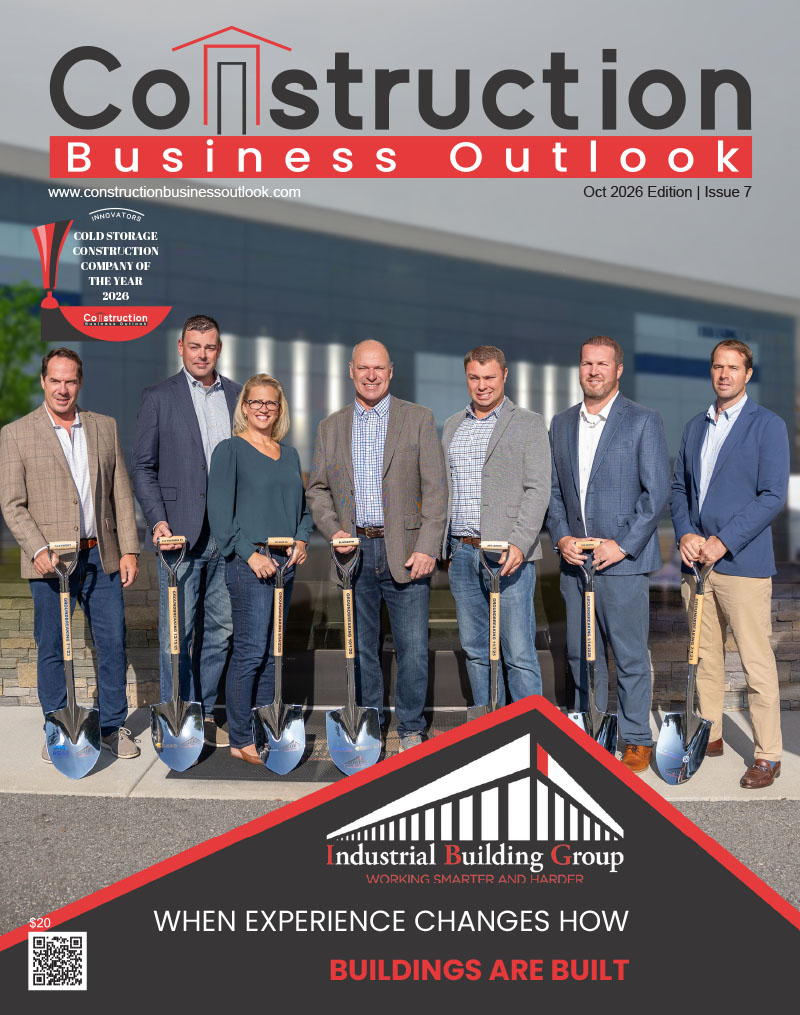
Today, the company has seven partners and a team of approximately 25 to 32 employees, depending on workload. Its work spans cold storage, dry storage, speculative warehouse development, Unit Cold facilities, and food processing.
But the company’s most important asset may not be its size.
It is what the team has learned along the way.
Every project adds another lesson. Every difficult site presents another problem to solve. Every customer creates another opportunity to understand how a building needs to perform—not simply how it needs to be constructed.
That accumulated experience is what IBG brings to the table.
Because in a business where small decisions can have million-dollar consequences, experience isn’t just measured in years.
It is measured in the problems you know how to solve, the opportunities you know how to find, and the value you create for the customer.
That is when experience changes how buildings are built.